
























.jpg)


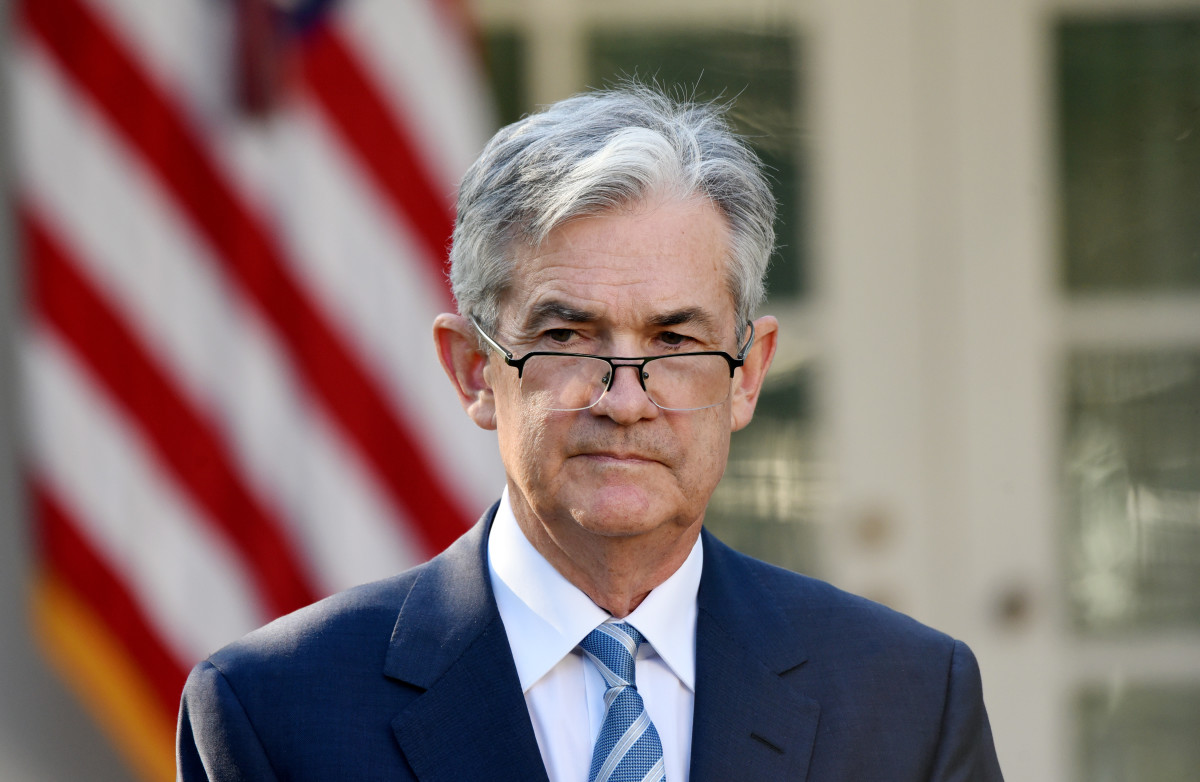
The Federal Reserve may have found the time it needs to determine the impact of President Donald Trump’s strategies on the largest economy in the world, after a stopping of mutual fees between the United States and China that could settle global trade tensions.
Traders are now betting that the Federal Reserve will not reduce the standard lending rate, which has been linked by 4.375 %, until at least September after the weekend agreement between Washington and Beijing, reducing customs tariffs on Chinese Chinese goods to about 30 % and boats on American exports to 10 %.
💸💰Do not miss this step: Subscribe to the free daily newsletter of Thestreeet 💰💸
The two sides also pledged to maintain low tariff rates in place for at least 90 days, while creating a “mechanism to continue discussions on economic and commercial relations.”
The sudden agreement, which was reached late on Sunday after a series of marathon talks in Switzerland led by Treasury Secretary Scott Pisent, opens about 600 billion dollars in trade in two directions between the world’s largest economists, and is likely to eliminate the risk of American recession between now and the end of the year.
Olivier Douliery & Sol; Bloomberg via Getty Images
The GDP in Atlanta, the GDP, which tracks the growth of the United States in the actual time, is advancing in the second quarter of the economy by 2.3 %, while the Ministry of Trade later this month will update its official reading for the first quarter, which is 0.3 %.
The President of the Federal Reserve, Jerome Powell, warned last week that “if the major increases in the customs tariff that were announced sustainable, it is likely to generate an increase in inflation, slow economic growth, and an increase in unemployment,” while he was hinting at the risk of stagnation and contracting the main lending rate of the central bank in one place respectively.
Related: Federal Reserve Hints at the Risks
“In the end, we believe that the price of our policy is in a good place to stay while we are waiting for more clarity on the definitions, and eventually our effects on the economy,” said Powell.
Low chances of reducing the interest rate in June
Fedwatch from CME Group has now prompted the risk of reducing the federal reserve price until September, while reducing the chances of a quarter of a point in June, when the Federal Reserve publishes new growth and enlargement expectations. The chances of reducing the interest rate now are only 8.1 %, a decrease from 64.4 % this time last month.
Traders also expose their total perception to reduce prices from three to two, raised at the rate of federal funds between 3.75 % and 4 % by the end of the year.
“We may have to wait for the economic data cycle in May as a minimum and perhaps also June data to obtain a better reading of the American economic track,” said John Hardy, the global president of the total economy strategy at Saksu Bank.
Inflation pressures can continue through current tariff schedules, however, especially because relaxing fees between the United States and China is likely to stimulate the prospects for growth in the short term.
The goods made from China will carry a 30 % tariff, which will be paid by American importers and is likely to be transferred to consumers in the form of an increase in prices, while the duties associated with non -compatible goods in the USCMA agreement will impose an additional cost of 25 % on imports from Canada and Mexico.
The powers of the effect of potential inflation US dollar higher
The high expectations of the rate, as well as the potential impact of the fastest inflation, is the operation of the US dollar with a firmly trading early on Monday, as Greenback has last seen 1.22 % against a basket of its global peers.
Meanwhile, Treasury revenue jumped for 10 years, which jumped 8 basis points from Friday to trade by 4.463 %, with a two -year temperature increased by 12 basis points to 4.002 %.
More economic analysis:
- The Federal Reserve’s inflation scale puts the risk of stagnation as the bite of tariff policies
- American recession jumps with a decrease in gross domestic product
- Like or not, the bond market rules everything
These moves can accelerate if the consumer price index report on Tuesday for the month of April, the first series of readings that will include Trump’s influence, which Trump called the day of liberation, unveiled April 2.
Economists expect major pressure kept at an annual rate of 2.4 %, but it is likely to jump 0.3 % of March levels, with basic reading and 2.8 % increase and 0.3 % respectively.
“It is expected that the US consumer price index numbers will come hot on Tuesday, making US prices supported,” said Chris Turner, Chris Turner, Chris Turner, Chris Turner.
He added: “The rest of the data evaluation is relatively empty, which means that positive addresses can remain the main driver of global rates.” “Until it is informed otherwise by the main data or addresses, the upward pressure on the prices can be held at the present time.”
